
Care technology is most useful when it solves a specific problem. A shared calendar may help with appointments; a medication reminder may support a routine; a door alert may be part of an agreed safety plan. Start with the need, then consider the simplest suitable tool and who will maintain it.
Medication reminders and dispensers
A phone reminder can prompt a person to follow their prescribed routine. A connected dispenser may also organize access to pills and send activity alerts, depending on the model. Neither a reminder nor a dispensing record proves someone swallowed the medicine. A trusted person still needs to review alerts and follow up.
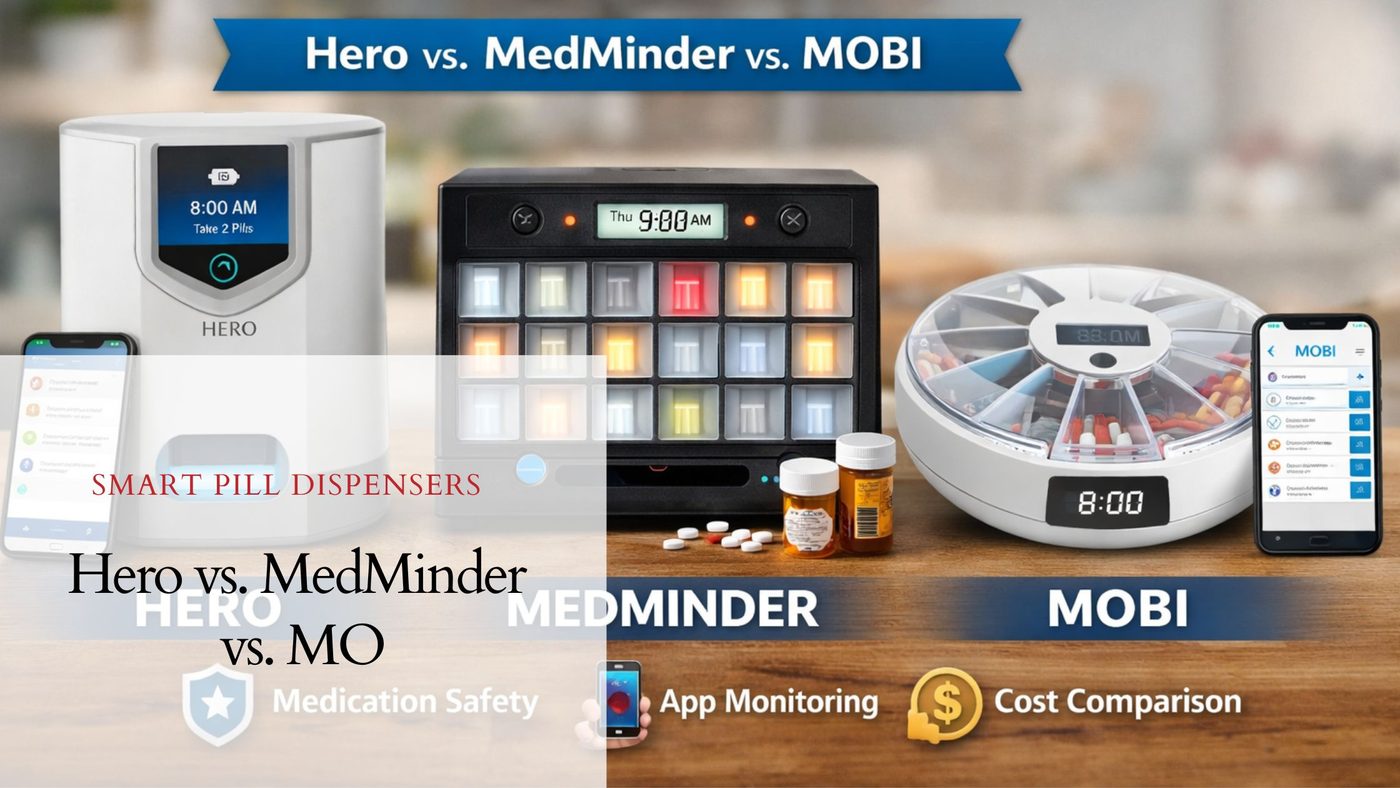
Keep a current medication list and ask a pharmacist whether each medicine is suitable for a dispenser. Consider storage conditions, dose changes, and medicines that must stay outside the device. Read our separate comparison of Hero, MedMinder, and MOBI before choosing an approach.
Shared calendars and care notes
A shared calendar can make appointments, visits, and responsibilities easier to see. Agree on who updates it and how a change is confirmed. Keep notes factual and give access only to the people who need it. Avoid placing sensitive medical details in an unsecured shared document or group chat.
Sensors and fall alerts
Door and motion sensors may help identify an event that needs a response. Wearable fall-detection features have limits: Apple states that Apple Watch cannot detect every fall. Check the exact model, settings, connectivity, and emergency-contact process before relying on any device.
Agree on who receives alerts and what they will do if they cannot reach the person. Test the arrangement and plan for a flat battery, power cut, or internet outage. Monitoring equipment should not be used as a substitute for a level of supervision recommended by the care team.
Telehealth appointments
Telehealth can support consultations and communication with a healthcare provider from home. Ask the person’s existing practice which visits can happen remotely and what equipment is needed. Some concerns still require an examination in person. Confirm availability, fees, and insurance coverage directly; coverage for one service does not mean a consumer device is covered.
Privacy and consent
Discuss monitoring with the person receiving care and the appropriate decision-maker where relevant. Review permissions, account access, and how recordings or health data are used. Cameras in private spaces need particular care. Choose strong passwords and remove access when someone leaves the care team.
A simple buying checklist
Before choosing a tool, define the problem it should solve and check whether the person can use its screen, sounds, and controls comfortably. Decide who will set it up, maintain it, and respond to alerts. Compare all ongoing costs and ask what happens during an outage or after cancellation.
For medication-specific questions, read our smart pill dispenser comparison. Forrester Homecare can discuss your family’s care needs; ask the team which services and technology support are actually available.
Sources and further reading
This article is general information, not medical advice. Please speak with a healthcare professional about individual health and medication decisions.