

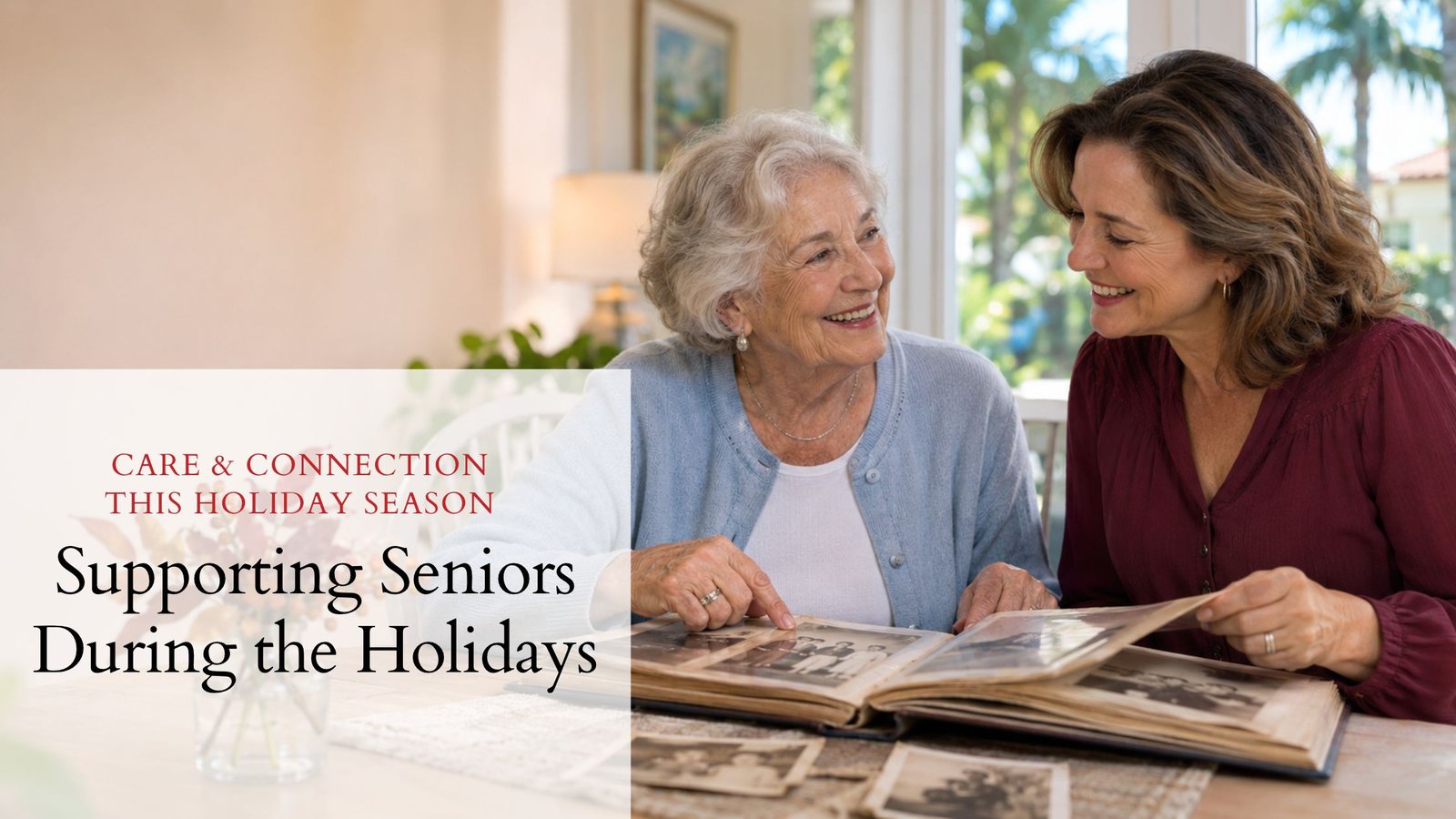
The holidays bring opportunities to share meals, revisit traditions and spend time with the people we love. As families grow and circumstances change, the way we celebrate may need to change, too.
An older loved one may look forward to a lively gathering—or prefer a quiet afternoon at home. Someone who once hosted every celebration may now welcome help with the preparations. For families balancing work, travel and caregiving, a little planning can make room for more time together.
Supporting seniors during the holidays begins with listening. Here are five thoughtful ways to show you care.
Include your loved one in the plans
Before deciding where to gather or how long to stay, ask your loved one what they would enjoy.
Try a simple question:
“What would make this holiday feel special to you?”
Their answer might surprise you. A favorite meal, a familiar song or a visit from one close friend may matter more than a busy celebration.
Offer choices without taking over. Ask whether they would prefer to host, visit someone else or celebrate in a smaller way. If travel or a long day feels difficult, discuss alternatives together.
The goal is to help them participate in a way that feels comfortable and respects their wishes.
Make room for familiar routines
Holiday schedules can quickly become crowded. Consider leaving space for the routines your loved one values, including their usual meals, rest and quiet time.
A few practical arrangements can help:
- Agree on transportation before the day of the gathering.
- Offer a comfortable place to sit and take a break.
- Ask whether a shorter visit would be preferable.
- Share plans in advance so there are fewer surprises.
- Make it easy to leave early without feeling guilty.
You do not need to recreate every detail of past holidays. Keeping one meaningful tradition can be enough.
Perhaps someone who used to prepare the entire dinner would enjoy choosing the menu, sharing a recipe or helping with one small part. Ask what they would like to contribute rather than assuming they want to stop participating.
Keep connection going beyond the celebration
A holiday visit can be a lovely opportunity to reconnect. Regular contact afterward can help that connection continue.
Before saying goodbye, agree on the next call or visit. Choose something realistic that both of you can look forward to: a weekly phone conversation, a shared lunch or time looking through family photographs.
For relatives living farther away, a phone or video call can help everyone stay involved. Ask which method your loved one prefers, and offer help with technology if they want it. The National Institute on Aging includes staying in touch with family and friends among its practical suggestions for maintaining social connection. Explore tips for staying connected from the National Institute on Aging.
Remember that being alone does not necessarily mean someone feels lonely. Ask how they are feeling and what kind of company they would welcome.
The holidays can also bring memories of people who are no longer here. Give your loved one room to talk, remember or simply enjoy quiet company without pressure to feel festive.
Support the person who usually provides care
Behind many family celebrations is someone coordinating visits, preparing meals and making sure a loved one has the support they need.
This season, thank that person—and offer specific help.
Instead of saying, “Let me know if you need anything,” try:
- “Could I bring dinner on Thursday?”
- “Would it help if I organized the family visits?”
- “Can I pick up the groceries this week?”
- “Which task would you most appreciate someone taking over?”
Agree on the details and follow through. If a task involves care you are unfamiliar with, ask what it requires before offering to take responsibility.
Sharing practical duties can make it easier for family caregivers to enjoy the holiday, too.
Start conversations about support gently
Spending time together may lead to conversations about what is working well at home and what has become more difficult.
Choose a calm, private moment to listen. Start with an open question such as “Is there anything you would like a little more help with?”
Keep your loved one involved in decisions. Avoid turning a family gathering into an unexpected discussion about everything others think should change.
You do not have to solve every concern at once. Write down questions, discuss preferences and agree on one next step. That might mean sharing a household task, arranging more regular visits or learning about available homecare services.
Gratitude can be a practical act
A thoughtful holiday does not have to be an elaborate one.
Listening to a favorite story, honoring a preference, bringing a meal or keeping a promise are all ways to show someone they matter. Small acts of care can become habits that continue well beyond the season.
At Forrester Homecare, we are grateful for the families, caregivers and neighbors who support older adults throughout Broward County.
This article is general information, not medical advice. Please speak with a healthcare professional about individual health and medication decisions.