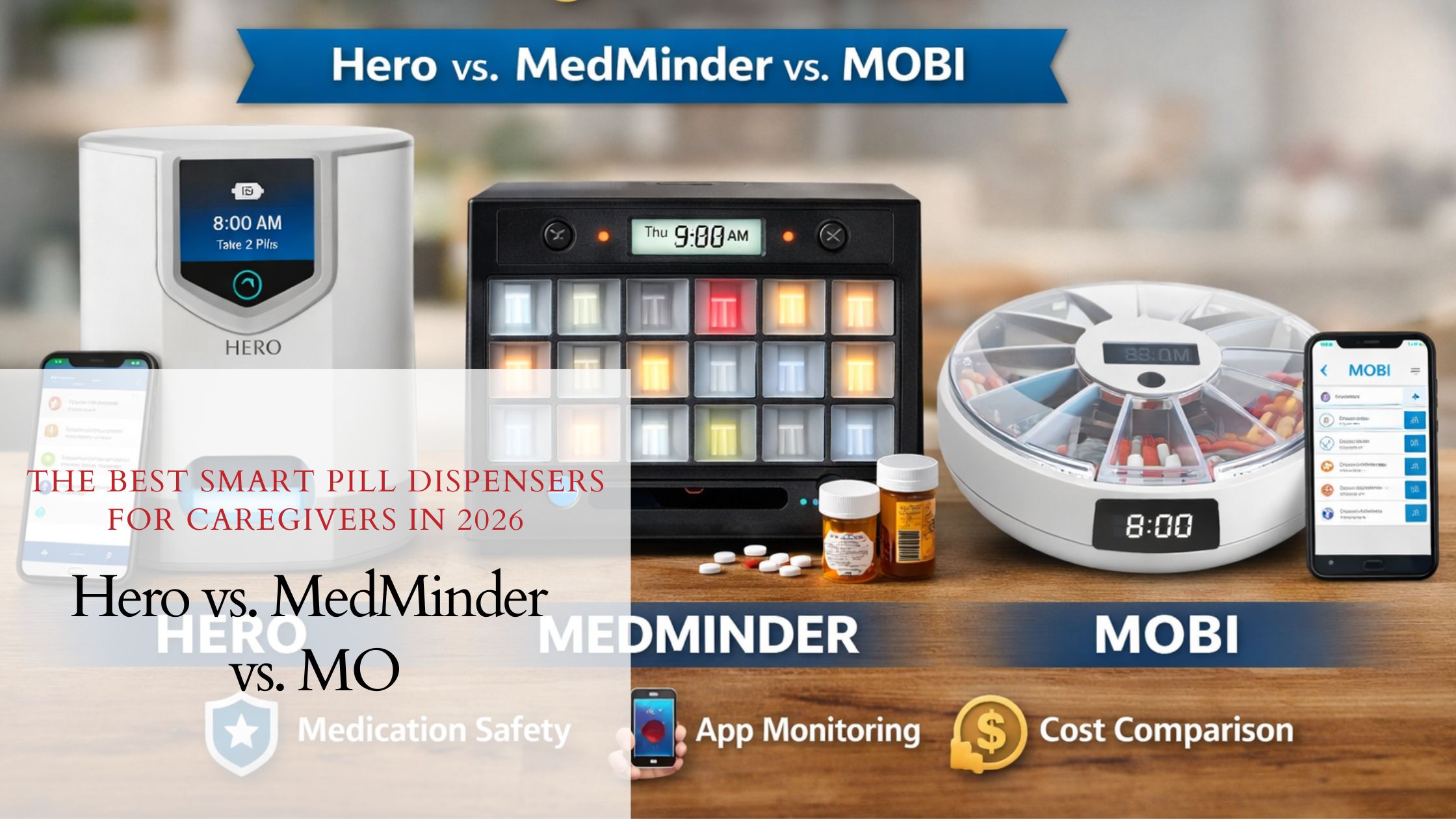
The Best Smart Pill Dispensers for Caregivers in 2026: Hero vs. MedMinder vs. MOBI
The Best Smart Pill Dispensers for Caregivers in 2026: Hero vs. MedMinder vs. MOBI
In our previous article, Tech Tools for Caregivers in 2026: Medication Tech, Remote Monitoring & Smart Care Coordination, we explored how innovation is transforming family caregiving. Among all available technologies, medication management remains one of the most impactful stress-reduction tools for families.
Ensuring the right dose is taken at the right time, preventing missed medications, and managing multiple prescriptions can quickly become overwhelming. Smart pill dispensers help reduce risk, improve adherence, and give caregivers real-time visibility—while allowing older adults to maintain independence.
In this guide, we compare three of the most trusted smart pill dispensers available in the U.S. in 2025: Hero, MedMinder, and MOBI.
1. Hero Health
Best for: Families seeking a premium, automated, app-integrated solution.
How it works:
Hero is a countertop automatic dispenser that holds up to a 90-day supply of medications. It sorts and dispenses pills at scheduled times using audible alerts, visual prompts, and mobile notifications. Caregivers monitor adherence, refill status, and dosing history through the Hero app.
Cost:
$37.49/month (3-year plan) or $44.99/month month-to-month.
Pros:
Sleek, modern design
FDA-registered device
Real-time caregiver alerts via app
Strong brand reputation and customer support
Large medication capacity (ideal for complex regimens)
Cons:
Subscription required
Higher monthly cost compared to competitors
Bottom Line:
If budget permits, Hero offers one of the most comprehensive medication management systems available. It’s ideal for tech-comfortable families who want automation and continuous oversight.
2. MedMinder (Jon, Maya, Anna Models)
Best for: Caregivers supporting loved ones with dementia or Alzheimer’s disease.
How it works:
MedMinder resembles a traditional pillbox but locks individual compartments until the scheduled dosing time. The device uses flashing lights, chimes, and voice prompts. Caregivers receive alerts if a dose is missed, and certain plans include live monitoring services.
Cost:
$39.99–$79.99/month depending on features.
Pros:
Locking compartments reduce overdose risk
Voice prompts designed for cognitive impairment
Optional 24/7 monitoring services
Strong safety profile for memory-related conditions
Cons:
Bulkier design
Subscription-based pricing
Bottom Line:
MedMinder is especially effective for individuals experiencing memory decline. The locking feature provides a critical safety layer that many families find invaluable.
3. MOBI Smart Medication Dispenser
Best for: Budget-conscious families seeking a one-time purchase.
How it works:
MOBI’s 28-day dispenser organizes medications into rotating compartments. It uses alarms, lights, and app notifications to remind users when it’s time for a dose. Caregivers can track adherence through the companion app.
Cost:
Approximately $149.99 (one-time purchase).
Pros:
Affordable upfront cost
Simple setup
WiFi-enabled alerts
No ongoing subscription
Cons:
Smaller capacity (28 days)
Fewer advanced features
Less robust customer support compared to premium brands
Bottom Line:
MOBI provides dependable reminders without the commitment of a subscription. It’s a practical option for families managing relatively stable medication routines.
What’s New in Medication Technology for 2026?
Beyond these three devices, the medication technology space continues evolving. Emerging trends include:
AI-driven adherence analytics that detect patterns and flag potential health concerns
Integrated pharmacy syncing, allowing automatic refill coordination
Voice assistant integration (Alexa/Google compatibility)
Remote care dashboards that integrate medication tracking with fall detection and vitals monitoring
Smart blister packs used by some pharmacies for pre-sorted, sensor-enabled medication tracking
As healthcare shifts toward home-based care, medication tech is becoming more integrated, predictive, and connected to broader care management systems.
Side-by-Side Comparison

Choosing the Right One
The “best” smart pill dispenser depends entirely on your caregiving needs:
Choose Hero if you want automation and full app integration.
Choose MedMinder if medication safety and memory support are your top priorities.
Choose MOBI if you prefer affordability and no subscription.
Technology can significantly reduce medication errors—but it works best when paired with human oversight and compassionate care.
How Forrester Homecare Can Help
Smart devices are powerful tools, but they are most effective when part of a comprehensive care plan. At Forrester Homecare, our caregivers provide hands-on medication reminders, coordination with pharmacies and physicians, and ongoing monitoring to ensure safety and adherence. We help families evaluate whether a smart dispenser is appropriate, assist with setup and training, and integrate technology into daily care routines.
If medication management is becoming overwhelming, Forrester Homecare can provide the professional support and peace of mind your family deserves—so your loved one can remain safe, independent, and well cared for at home.