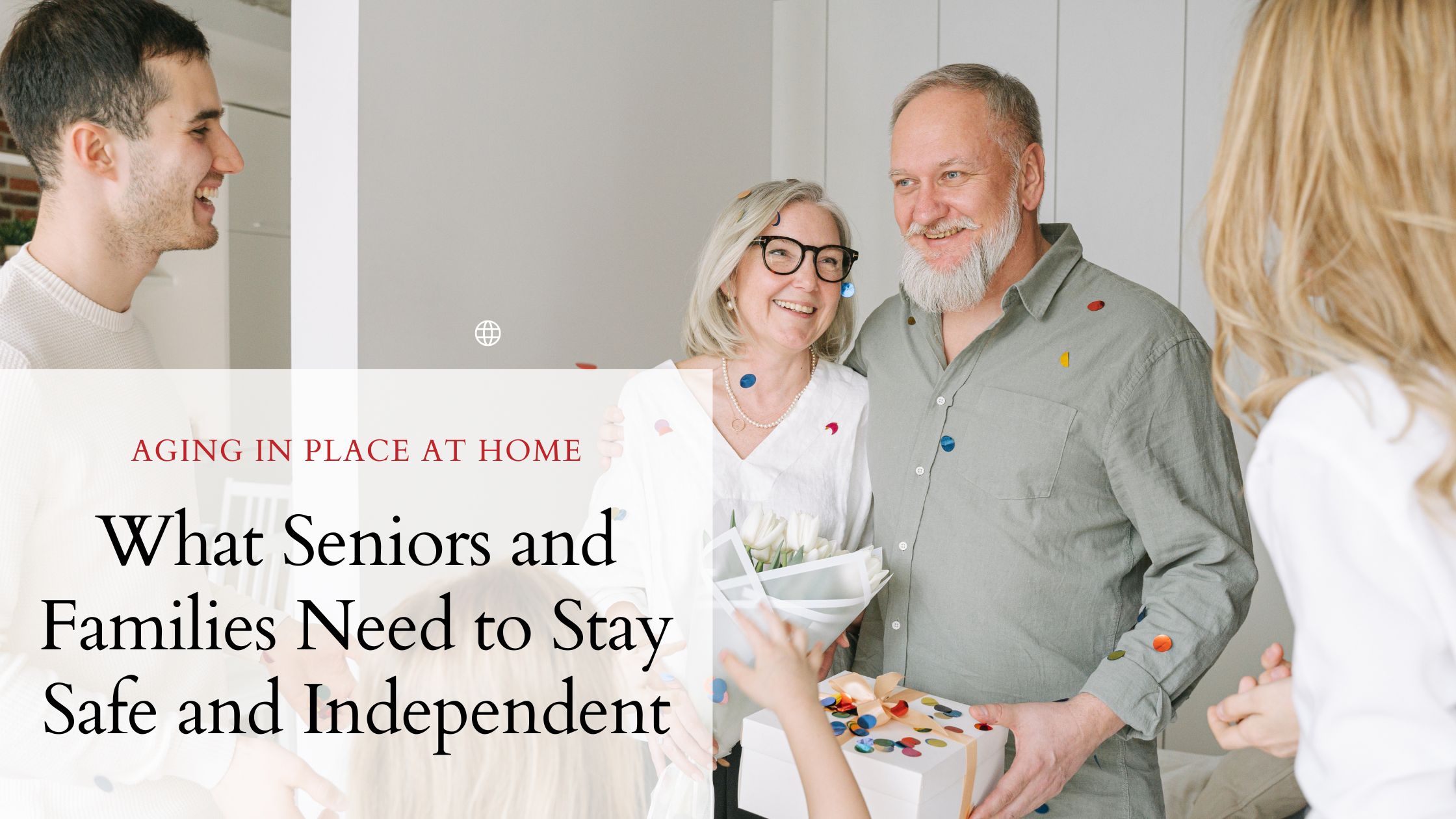
Aging in Place at Home: What Seniors Need to Stay Independent
What Aging in Place Really Requires
Most older adults say they want to age in place — to remain in the comfort of their own home as they grow older.
It sounds simple. Familiar. Comfortable.
But aging in place doesn’t happen automatically. It requires planning, support, and the right environment to remain safe and sustainable long-term.
Without those elements, staying at home can quickly become unsafe — and independence can be lost sooner than expected.
Here’s what aging in place really requires.
1. A Safe Home Environment
The home that once felt effortless to navigate can gradually become risky as mobility, balance, and vision change.
Common hazards include:
Stairs without handrails
Slippery bathroom floors
Poor lighting
Cluttered walkways
Hard-to-reach storage areas
Aging in place starts with reducing fall risks in the home and improving accessibility.
Simple changes can make a major difference:
Installing grab bars
Improving lighting
Removing trip hazards
Adding non-slip flooring
Rearranging frequently used items
Safety is the foundation of independence.
2. Support With Daily Activities
Even when someone is still living at home, everyday tasks can become more difficult over time.
These may include:
Meal preparation
Bathing and grooming
Dressing
Medication reminders
Light housekeeping
Mobility around the home
Without support, these challenges can lead to skipped meals, hygiene issues, or increased fall risk.
Aging in place often requires consistent assistance, not just occasional help.

3. Mobility and Fall Prevention
Falls are one of the biggest threats to aging in place. One serious fall can lead to hospitalization, rehabilitation, or permanent relocation.
Maintaining independence means actively reducing fall risk through:
Safe movement assistance
Supervision during transfers
Strength and balance support
Clear walking paths
Proper footwear and equipment
Fall prevention is not a one-time fix — it’s an ongoing effort.
4. Social Connection and Emotional Well-Being
Aging in place isn’t just about physical safety. Isolation is a major concern for older adults living at home.
Over time, limited mobility, loss of friends, or inability to drive can reduce social interaction.
This can lead to:
Loneliness
Depression
Cognitive decline
Reduced motivation for self-care
Regular companionship and engagement play an important role in maintaining quality of life.
5. Transportation and Errands
Many older adults eventually stop driving, which creates new challenges:
Grocery shopping
Medical appointments
Prescription pickups
Social activities
Without reliable transportation, independence becomes limited — even when someone is still living at home.
Support with errands and appointments helps aging in place remain practical and sustainable.
6. Ongoing Monitoring and Flexibility
Needs change over time. What works today may not work six months from now.
Aging in place requires:
Regular reassessment of safety
Adjusting levels of care
Identifying new risks early
Planning ahead for changing needs
Proactive support helps prevent emergencies and allows individuals to remain at home longer.
Aging in Place Is Not “Doing It Alone”
There’s a common misconception that aging in place means managing independently without help.
In reality, successful aging in place often includes:
Family support
Professional caregiving
Home safety modifications
Routine check-ins
The goal isn’t to avoid help — it’s to use the right support to maintain independence.
How Forrester Homecare Supports Aging in Place
At Forrester Homecare, aging in place is about helping individuals remain safe, comfortable, and confident in their own home.
Our caregivers can assist with:
Personal care and daily routines
Fall prevention and mobility support
Meal preparation and light housekeeping
Companionship and engagement
Transportation and errands
With the right support, aging in place becomes not just possible — but sustainable.